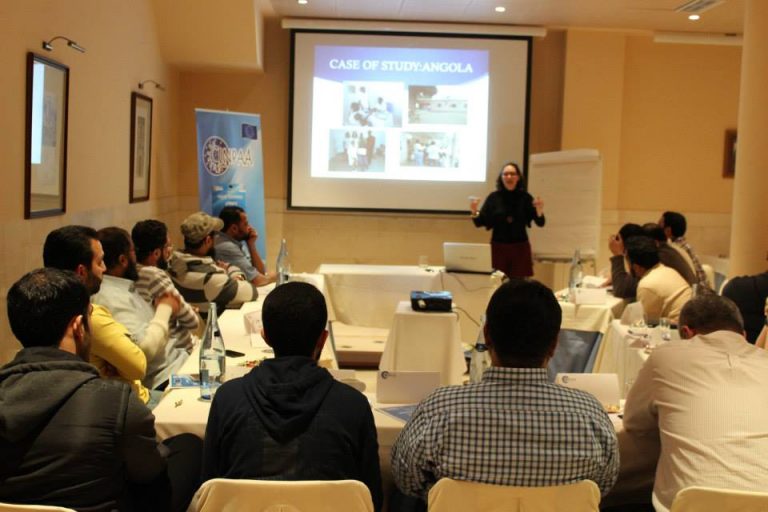
An executive programme focused on developing the ability of humanitarian leaders and teams to coordinate, make decisions, and manage response in changing environments and emergencies.
Programme objectives
Developing participants’ skills, knowledge, values and professional approaches in:
Strengthen leadership in complex humanitarian environments.
Improve coordination among teams and relevant stakeholders.
Develop faster and clearer decision-making.
Enhance organisational preparedness and response to emergencies.
Build and test a shared responsibility matrix for emergency response.
Target audience
Humanitarian programme managers
Operations and emergency response coordinators
Humanitarian team leaders
Programme topics
1Day 1
Leadership in humanitarian environments
Humanitarian principles as a test for leadership decisions in the field
Balancing speed of action with accountability to affected populations
Leadership styles for multi-agency teams working under pressure
Ethical dilemmas faced by humanitarian leaders and how to document them
Case study: reviewing a leadership decision taken during a rapid-onset emergency
Day output: personal checklist for principled emergency decisions
2Day 2
Organisational and field coordination
Stakeholder and role mapping across agencies, authorities and communities
Responsibility matrices and escalation routes for emergency response teams
Interfaces between headquarters, country offices and field teams
Common coordination failures: gaps, overlaps and unclear mandates
Workshop: mapping roles and escalation routes for a simulated response
Day output: draft stakeholder map and escalation chart
3Day 3
Emergency and crisis management
Working through deteriorating situation scenarios step by step
Prioritising protection and life-saving response when resources are short
Setting clear decision points and triggers as a crisis evolves
Managing team welfare, stress and rotation during prolonged emergencies
Workshop: scenario exercise on a rapidly deteriorating displacement situation
Day output: priority list and decision triggers for the scenario
4Day 4
Preparedness and response readiness
Early warning indicators and the thresholds that should trigger action
Contingency planning linked to realistic response capacities
Emergency team readiness: rosters, briefing packs and deployment steps
Pre-positioning resources and agreeing standby arrangements with partners
Workshop: emergency team readiness exercise with timed deployment tasks
Day output: readiness checklist for an emergency team
5Day 5
Collaboration among stakeholders and teams
Agreeing information-sharing arrangements between partner organisations
Building trust and joint working with local actors and authorities
Running a joint after-action review that leads to agreed changes
Building and testing a shared responsibility matrix for emergency response
Case study: joint after-action review of a multi-agency emergency operation
Day output: tested shared responsibility matrix and improvement actions
Certificates
On successful completion, participants receive a certificate issued by CINPAA, a training institute officially registered in the European Union, Spain and the United Kingdom.
Our programmes are delivered within academic and professional partnerships, cooperation agreements and memoranda of understanding with a number of academic and professional institutions, including:
Camilo José Cela University – Spain
ISDE – Law & Business School – International
Professional Development Institute – United Kingdom
These partnerships aim to exchange expertise, develop training content and raise programme quality in line with international best practice.
Available dates and cities
Dates and destinations are subject to confirmation after your request is reviewed.