Skip to content

FINANCIAL OVERSIGHT, BUDGET AND STRATEGY: NOT-FOR-PROFIT GOVERNANCE AND ASSURANCE

Place
Barcelona, Spain
Date

About the programme

PROGRAM DESCRIPTION: This CPE course reviews procedures and example policies that help maintain good governance and financial oversight by a not-for-profit (NFP) board of directors. It covers basic organizational structure and the responsibilities of a typical NFP finance committee, investment committee, and audit committee that work in partnership to ensure proper stewardship of the NFP’s resources. You will also learn about budget preparation and monitoring, as well as strategies to analyze the financial health of an NFP, including dashboard reports, analysis, techniques and key ratios to

Full reference content

PROGRAM DESCRIPTION:

This CPE course reviews procedures and example policies that help maintain good governance and financial oversight by a not-for-profit (NFP) board of directors. It covers basic organizational structure and the responsibilities of a typical NFP finance committee, investment committee, and audit committee that work in partnership to ensure proper stewardship of the NFP’s resources. You will also learn about budget preparation and monitoring, as well as strategies to analyze the financial health of an NFP, including dashboard reports, analysis, techniques and key ratios to manage and monitor liquidity, cash flow and efficiency.

Objectives:

By the end of the course, participants will be able to:

  •  Distinguish between the roles and responsibilities of a typical NFP’s board and management with respect to financial oversight.
  • Identify strategies to analyze the financial health of an NFP.
  • Recall key accounting policies unique to NFPs.
  • Recognize steps to prepare and monitor a successful budget for NFPs.
  • Recall the principles of ethical fundraising and responsible stewardship of contributed resources.

Agenda

  • NFP governing body’s purpose, role, and responsibility
  • IRS Form 990
  • Written policies and procedures for NFP boards and committees
  • Uniform Prudent Management of Institutional Funds Act (UPMIFA)
  • Ratio analysis
  • Accounting policies
  • Budgeting
  • Types of budgets
  • Operating reserves
  • Dashboards
  • Responsible fundraising
  • Risk management

RECOMMENDED PARTICIPANTS

CPAs involved in NFP financial oversight as well as staff and board members at small- and medium-sized NFPs

 Workshop Methodology:

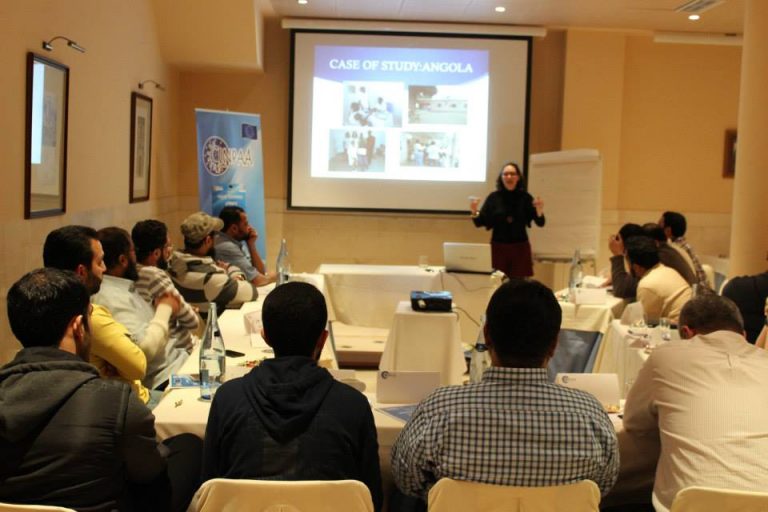
The program will be conducted along workshop principles with formal lectures, case studies and interactive worked examples. Relevant case studies will be provided to illustrate the application of each topic in an operations environment Difficult concepts are minimized wherever possible and handled in a visual way that is easy to understand with examples demonstrated.

Each learning point will be re-enforced with practical exercises.

-           The foundations of our programs are based on new pedagogy in the training, which includes training in effective methods of linking the theory and practice directly according to the and needs of each participant.

-           Attendee accomplishing the training will get a certificate accredited from CINPAA training centre which is an accredited European organisation registered and based in Spain and Britain .

For more information send us at:

info@cinpaa.org or whatsapp or viber:

+34-63-586-76-86

Programme objectives

Developing participants’ skills, knowledge, values and professional approaches in:

  1. Distinguish between the roles and responsibilities of a typical NFP’s board and management with respect to financial oversight.
  2. Identify strategies to analyze the financial health of an NFP.
  3. Recall key accounting policies unique to NFPs.
  4. Recognize steps to prepare and monitor a successful budget for NFPs.
  5. Recall the principles of ethical fundraising and responsible stewardship of contributed resources.

Target audience

  • Board members with financial oversight responsibilities.
  • Finance managers in not-for-profit organisations.
  • Audit and assurance officers reviewing charitable programmes.

Programme topics

Day 1

The governing body and its purpose in financial oversight

  • Purpose, role and responsibility of a not-for-profit governing body
  • Fiduciary duties of board members: care, loyalty and faithfulness to the mission
  • How financial oversight protects the mission and the trust of donors and the public
  • Board composition, financial literacy and the skills a finance committee needs
  • Case study: reviewing how a board responded to early signs of financial difficulty
  • Day output: summary of the board’s duties in financial oversight
Day 2

Board and management roles, policies and committees

  • Distinguishing board and management responsibilities in financial oversight
  • Written policies and procedures for not-for-profit boards and their committees
  • Terms of reference for finance, audit and investment committees
  • Delegated authority limits and the matters reserved for the full board
  • Case study: reviewing the division of financial responsibilities between a board and its executive
  • Day output: board and management responsibility matrix
Day 3

Public reporting, disclosure and transparency

  • Public reporting and disclosure obligations, such as IRS Form 990 in the United States
  • What a public information return reveals about governance, pay and programme spending
  • Annual reports and financial statements as tools of accountability to stakeholders
  • Board review of filings and reports before they are submitted or published
  • Workshop: reading a published information return and noting the governance questions it raises
  • Day output: board checklist for reviewing annual filings and public reports
Day 4

Accounting policies specific to not-for-profit organisations

  • Key accounting policies that are specific to not-for-profit organisations
  • Recognising contributions, grants and pledges and the conditions attached to them
  • Classifying expenses by function: programme services, management and fundraising
  • In-kind contributions and volunteer services: when and how they are recorded
  • Workshop: classifying a set of revenue and expense transactions under not-for-profit policies
  • Day output: summary of the accounting policies the board should understand
Day 5

Restricted funds, endowments and UPMIFA

  • Restricted and unrestricted funds and endowment stewardship, with reference to UPMIFA
  • Tracking donor restrictions and releasing funds when the conditions are met
  • Prudent investment, spending policy and preservation of endowment value under UPMIFA
  • Board oversight of investment policy, investment managers and performance reports
  • Case study: assessing an endowment spending decision during a period of weak investment returns
  • Day output: restricted funds and endowment oversight checklist
Day 6

Financial statements and ratio analysis

  • Reading the statements of financial position, activities and cash flows of a not-for-profit
  • Ratio analysis to assess the financial health of a not-for-profit organisation
  • Liquidity, programme spending, fundraising efficiency and revenue concentration ratios
  • Trend analysis and comparison with peer organisations to put ratios in context
  • Workshop: ratio analysis of a not-for-profit organisation’s financial statements
  • Day output: financial health assessment with key ratios
Day 7

Operating reserves and liquidity management

  • Operating reserves: their purpose, target levels and a written reserves policy
  • Calculating months of operating reserves and the level of available liquid assets
  • Cash flow forecasting for organisations with seasonal or grant-dependent income
  • Rules for using and rebuilding reserves and reporting reserve levels to the board
  • Workshop: drafting a reserves policy with a target range and approval rules for its use
  • Day output: draft operating reserves policy
Day 8

Types of budgets and budget preparation

  • Types of budgets: operating, capital, programme and cash flow budgets
  • Steps to prepare a realistic budget with the involvement of programme managers
  • Allocating shared costs to programmes and estimating the full cost of each service
  • Board review and approval of the budget and its underlying assumptions
  • Workshop: building a programme budget with full cost allocation for one service
  • Day output: programme budget with documented assumptions
Day 9

Budget monitoring and financial dashboards

  • Monitoring budget performance and explaining variances to the board
  • Financial dashboards that give boards and committees a clear overview
  • Forecasting the year-end position and deciding on corrective action in time
  • Selecting the few indicators that each committee should see at every meeting
  • Workshop: designing a one-page financial dashboard for board meetings
  • Day output: budget monitoring calendar and board dashboard
Day 10

Ethical fundraising and donor relations

  • Principles of ethical fundraising and responsible relations with donors
  • Transparency, conflicts of interest and gift acceptance policies
  • Honest fundraising communications and the careful handling of donor data
  • Board oversight of fundraising costs, practices and third-party fundraisers
  • Case study: assessing a large conditional donation against gift acceptance principles
  • Day output: fundraising and gift acceptance policy checklist
Day 11

Stewardship of contributed resources and reporting to funders

  • Responsible stewardship of contributed resources and respect for donor restrictions
  • Reporting to donors and funders on the use of resources and the results achieved
  • Grant compliance: budgets, eligible costs and reporting deadlines set by funders
  • Measuring programme results so that reports show outcomes as well as spending
  • Workshop: preparing a funder report that links expenditure to programme results
  • Day output: donor and funder reporting template
Day 12

Risk management, internal control and assurance

  • Risk management frameworks suited to not-for-profit organisations
  • Internal controls, audit committees and the assurance role of external auditors
  • Fraud risks in small and medium-sized not-for-profits and practical controls against them
  • Working with the external auditor: audit planning, the management letter and follow-up
  • Workshop: building a risk register and assurance map for a not-for-profit organisation
  • Day output: risk register and assurance map
Day 13

Strategy, financial sustainability and the annual oversight cycle

  • Linking financial oversight with strategy and long-term financial sustainability
  • The annual oversight cycle for the board and its finance and audit committees
  • Bringing ratios, reserves, budgets and risks together in one board oversight report
  • Evaluating the board’s own effectiveness in financial oversight each year
  • Case study: integrated review of a not-for-profit’s finances, risks and strategy for its board
  • Day output: annual oversight plan for the board and its committees

Certificates

On successful completion, participants receive a certificate issued by CINPAA, a training institute officially registered in the European Union, Spain and the United Kingdom.

Our programmes are delivered within academic and professional partnerships, cooperation agreements and memoranda of understanding with a number of academic and professional institutions, including:

  • Camilo José Cela University – Spain
  • ISDE – Law & Business School – International
  • Professional Development Institute – United Kingdom

These partnerships aim to exchange expertise, develop training content and raise programme quality in line with international best practice.

Available dates and cities

Dates and destinations are subject to confirmation after your request is reviewed.

Date

City
London, United Kingdom
Choose date

No suitable date?

We deliver this programme for your organisation in the city and on the dates that suit you.

Programme length

Enter 1 to 365 days.

FINANCIAL OVERSIGHT, BUDGET AND STRATEGY: NOT-FOR-PROFIT GOVERNANCE AND ASSURANCEChoose a date