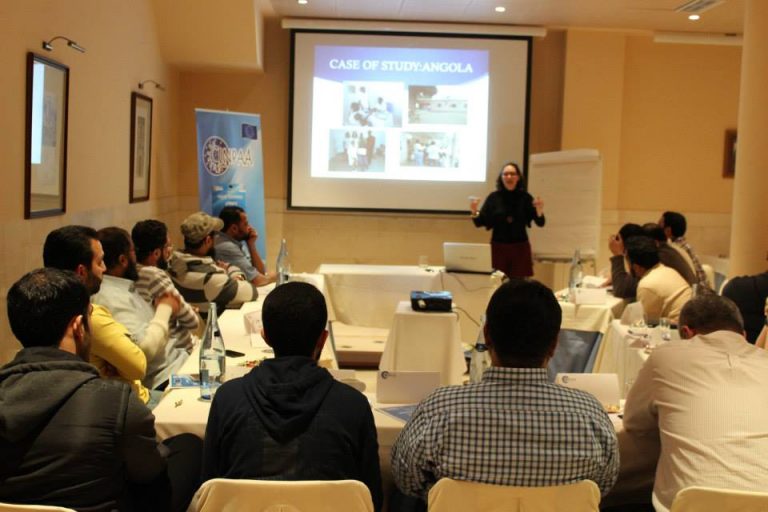
A programme that develops teams' ability to manage data and information and turn them into reliable inputs for planning, monitoring, and decision-making.
Programme objectives
Developing participants’ skills, knowledge, values and professional approaches in:
Improve data and information management.
Improve the quality and organisation of operational information.
Support analysis and reporting.
Strengthen evidence-based decisions.
Design a data quality register defining issues, responsibilities and corrective actions.
Target audience
Data and information management specialists
Monitoring and evaluation teams
Humanitarian and development programme and operations managers
Programme topics
1Day 1
The data lifecycle
Data collection, use, storage, retention and disposal
Responsibilities at each stage of the data lifecycle
Data needs of humanitarian and development operations
Planning data collection around operational decisions
Case study: tracing the lifecycle of beneficiary data in a field operation
Day output: data lifecycle map with responsibilities
2Day 2
Data quality
Completeness, accuracy, consistency and timeliness of data
Documenting and resolving data quality issues systematically
Automated validation rules in digital collection forms
Designing a data quality register with owners and actions
Workshop: building a data quality register for an operational dataset
Day output: data quality register with corrective actions
3Day 3
Information management and protection
Classifying and sharing information according to its sensitivity
Governance roles and access permissions for operational data
Protecting personal and sensitive data of affected populations
Information-sharing protocols with partners and authorities
Workshop: drafting a data classification and access permission scheme
Day output: information classification and access matrix
4Day 4
Analysis and reporting
Descriptive data analysis for operational and programme reports
Reports that state source limitations and data gaps honestly
Using spreadsheets and BI tools to automate routine reports
AI tools for cleaning, coding text responses and summarising data
Case study: producing an operational report from field data with stated limits
Day output: operational report with documented limitations
5Day 5
Information-based decision support
Writing decision briefs based on analysed operational data
Updating critical operational information on a fixed schedule
Maps and simple dashboards to show needs and coverage
Strengthening evidence-based decisions across operations teams
Workshop: drafting a decision brief from analysed operations data
Day output: decision brief with an information update plan
Certificates
On successful completion, participants receive a certificate issued by CINPAA, a training institute officially registered in the European Union, Spain and the United Kingdom.
Our programmes are delivered within academic and professional partnerships, cooperation agreements and memoranda of understanding with a number of academic and professional institutions, including:
Camilo José Cela University – Spain
ISDE – Law & Business School – International
Professional Development Institute – United Kingdom
These partnerships aim to exchange expertise, develop training content and raise programme quality in line with international best practice.
Available dates and cities
Dates and destinations are subject to confirmation after your request is reviewed.